Journal | 2026.09.16
Lake Utonai, near Tomakomai in Hokkaido, is a lake for water birds, where swans and geese arrive. This journal covers the lake as a Ramsar wetland, how it looks through the seasons, and how to visit the reserve.
The figures here come from the Ministry of the Environment and the city of Tomakomai, and cover only what can be checked, such as the size of the lake and the birds recorded there.
Auberge Mitsu is about 30 minutes away by car. Because it is close enough to visit before or after check-in, this journal also shows how the lake fits into a night's stay.
A Ramsar Wetland Made for Water Birds
Lake Utonai was registered as a Ramsar site on 12 December 1991. The listed area is 510 hectares, protected as a special protection zone within a nationally designated wildlife protection area.
The lake lies on the alluvial plain of the lower Bibi River. It was once a sea inlet, but from about 3,000 years ago sandspits and dunes closed it off, and it became fresh water.
| Item | Detail |
|---|---|
| Ramsar registration | 12 December 1991 |
| Listed area | 510 hectares |
| Lake area | 275 hectares |
| Perimeter | about 9 km |
| Average depth | 0.6 m |
270 Species Recorded, and the Swans and Geese
More than 270 bird species have been recorded at Lake Utonai. It is an important stopover for migratory birds.
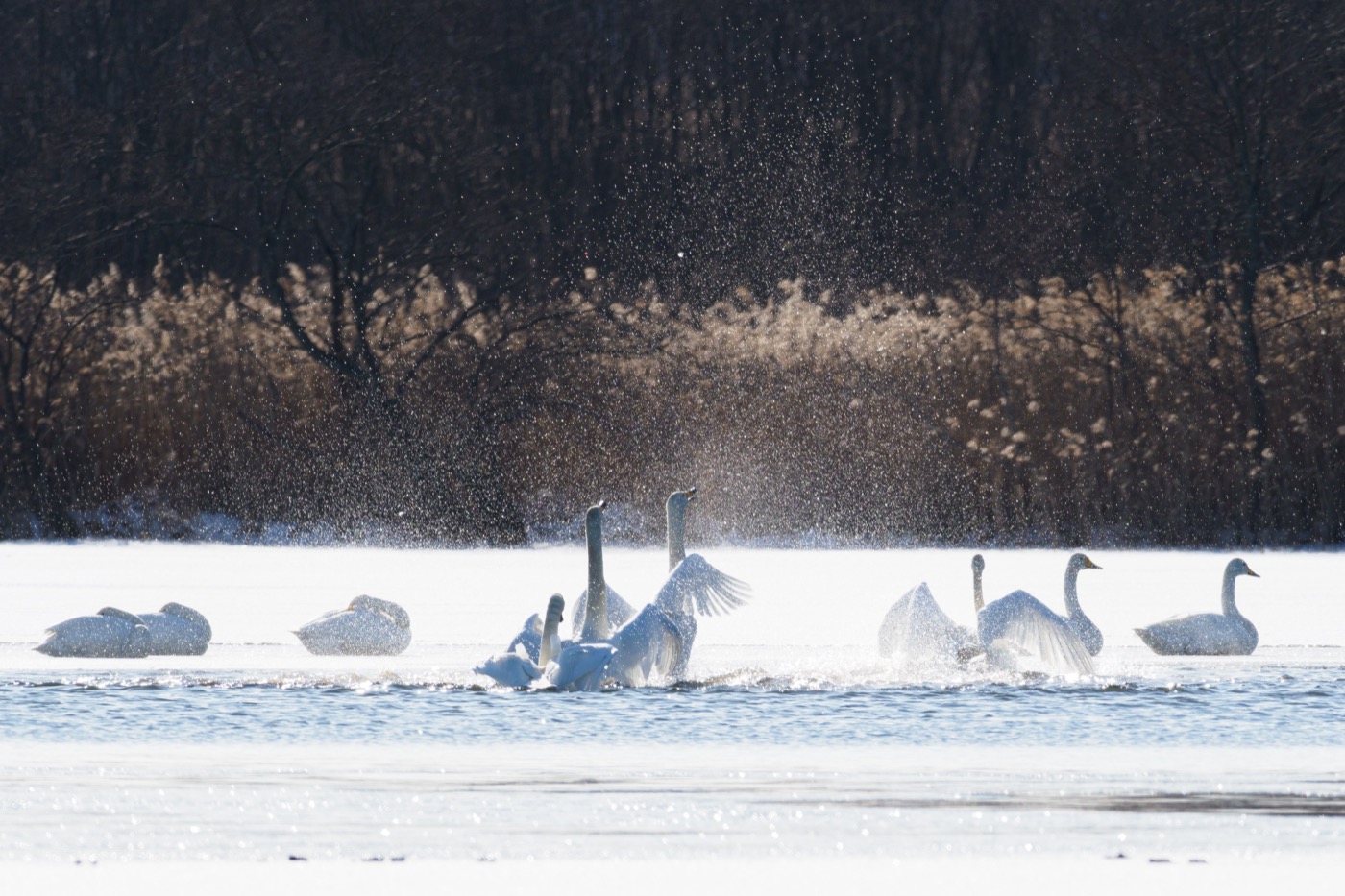
Each spring and autumn, greater white-fronted geese, bean geese, whooper swans and tundra swans arrive. Tens of thousands of geese, mostly greater white-fronted geese, are counted here in spring.
In winter, Steller's sea eagles appear over the lake. Some whooper swans stay through the winter as well.
Fifty Open Hectares in a Protected Lake
Fifty hectares of the shoreline are open, with nature trails and observation huts. The rest is a protection zone, where use is restricted.
In 2002, the Ministry of the Environment opened a wildlife conservation centre here. It is open from 9:00 to 17:00, and closed on Mondays (or the next day when the Monday is a public holiday) and over the New Year.
It is worth checking the opening days and hours before you go. You can also find the lake on the Around page for Mitsu.
How the Lake Changes from Autumn to Spring
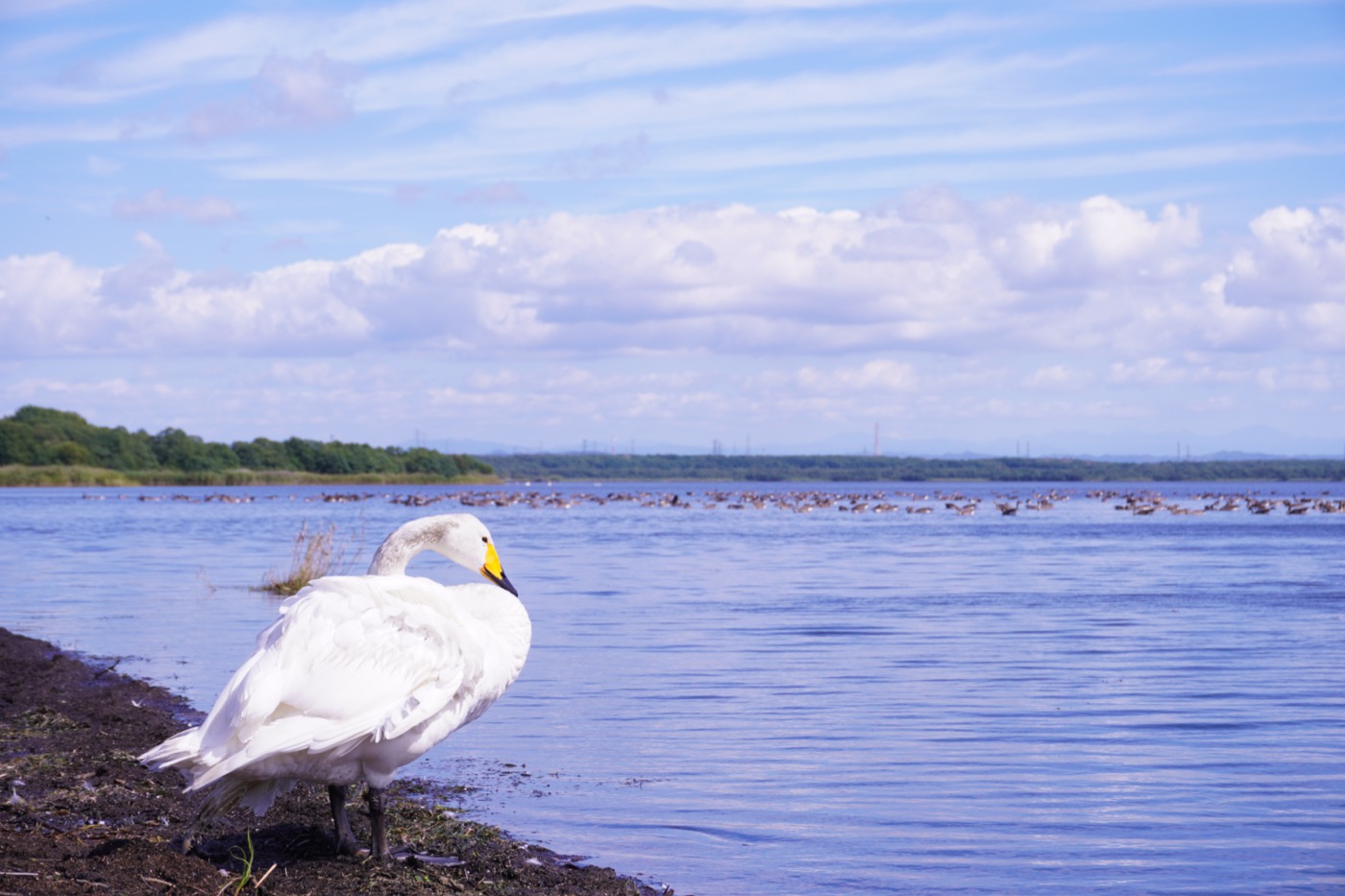
From autumn into winter, swans, geese and ducks arrive. From the lakeside, you can watch the water birds resting.
Spring suits bird watching too. There is a boardwalk, so you can walk along the edge of the lake.
About 30 Minutes by Car from Mitsu
Lake Utonai is about 30 minutes by car from Mori no Auberge Mitsu. Mitsu is also about 30 minutes from New Chitose Airport, about 20 minutes from Tomakomai, and about an hour from Lake Shikotsu.
Check-in is from 15:00 to 19:00, and check-out is at 10:00. The conservation centre closes at 17:00 and is shut on Mondays, so it helps to plan when to stop by.
There is parking for 10 cars, free of charge and with no reservation needed. For directions, please see the Access page for Mitsu.
A Night at Mitsu After the Lake
Mori no Auberge Mitsu takes three groups a night, in three rooms named Ki, Mi and Tsuki. The building is a 120-year-old farmhouse, taken down and raised again here.
Dinner is an omakase kaiseki course that follows the Hokkaido season, and breakfast is served too, except on room-only plans. Every room has its own goemon-style soaking tub in Shigaraki ceramic ware; it is not a natural hot spring but heated water, and there is no shared bathhouse.
The guide price is from about 28,000 yen per person with dinner and breakfast, based on two people sharing a room, and it changes with the room and the season. Rates are subject to change; please check the booking site before you travel. Payment is cashless only. For more, please see the Stay and Staying in Atsuma pages.
Frequently asked questions
When do swans come to Lake Utonai?
Swans, geese and ducks arrive in spring and autumn. From autumn into winter you can watch them resting at the lakeside. In winter, some whooper swans stay on the lake through the season, and Steller's sea eagles can be seen as well.
What birds can you see at Lake Utonai?
More than 270 bird species have been recorded here. In spring and autumn, greater white-fronted geese, bean geese, whooper swans and tundra swans arrive. Tens of thousands of geese are counted in spring.
Can you walk freely around Lake Utonai?
Fifty hectares of the shoreline are open, with nature trails and observation huts, while the rest is a protection zone with restricted use. The wildlife conservation centre is open from 9:00 to 17:00 and closed on Mondays (or the next day when the Monday is a public holiday) and over the New Year.
How far is Lake Utonai from Mitsu?
It is about 30 minutes by car from Mori no Auberge Mitsu. Mitsu is about 30 minutes from New Chitose Airport and about 20 minutes from Tomakomai. You can stop by before or after check-in.
Related: Around / Access / Staying in Atsuma / Stay | Back to the journal