Home Dining Rooms Facilities Stay Around Access Offers Info 日本語 繁中 한국어 Book Now

A Day at Mitsu

A day at Mori no Auberge Mitsu

From 15:00 check-in to 10:00 check-out

Letting the forest set the pace

From check-in to check-out the next morning.
Nothing here needs to be packed tightly. What follows is one example of how a day tends to go.

Guests arrive from 15:00 and leave at 10:00, and between those two points there is no schedule to keep except dinner. Only three groups are in the house at once, so nothing has to be queued for and nothing has to be booked in advance once you are here. The bath is in your room, the forest is outside the window, and the evening moves at whatever speed you give it.

Afternoon and Evening

The first day

The afternoon is deliberately loose. Most guests take the room first, sit by the window for a while, then go to the bath before dinner.

Check-in

PM15:00

Check-in

Set your bags down at the edge of the forest. From here on, the clock stops mattering.
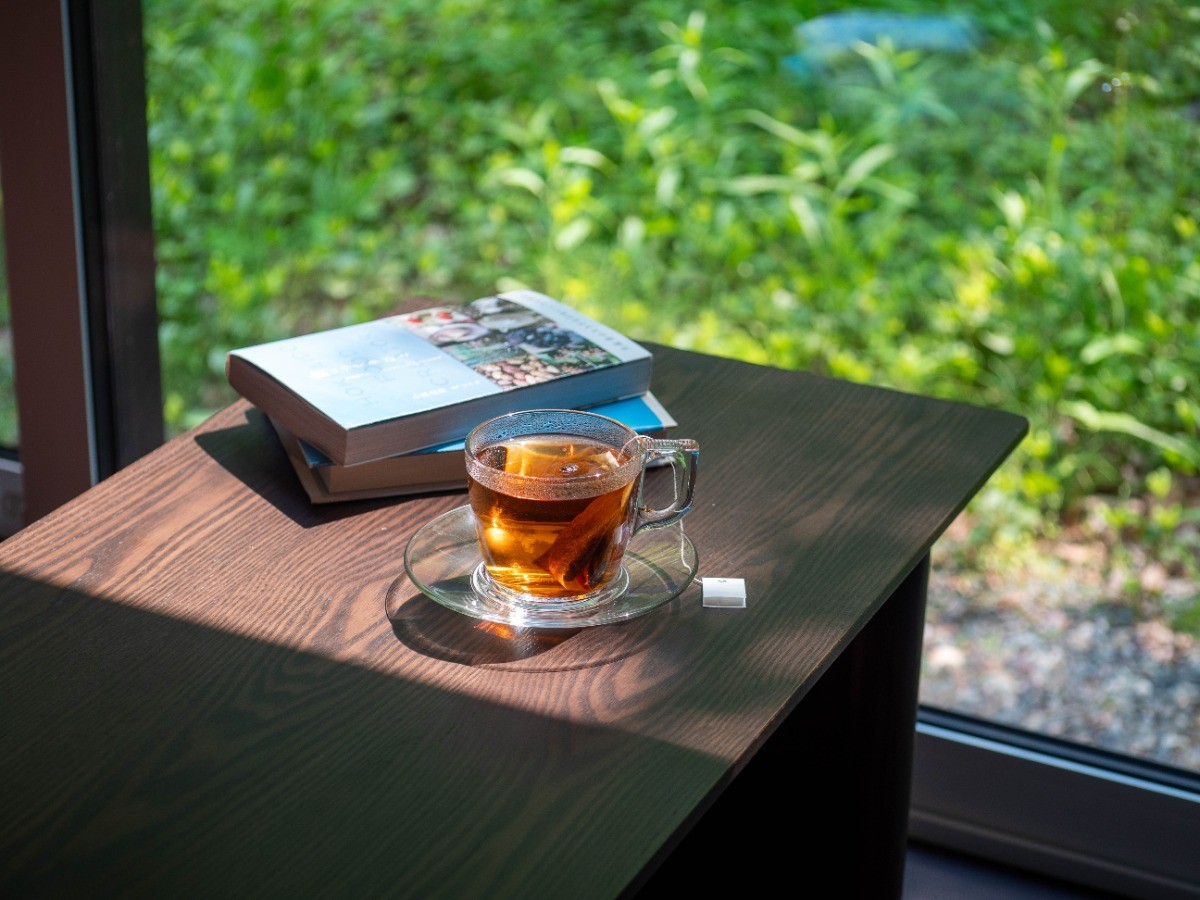
Forest bathing, from your room

PM16:00

Forest bathing, from your room

Sit by the large window and take the air in. Listen for the trees moving, and for the birds.

Into the bath

PM17:00

Into the bath

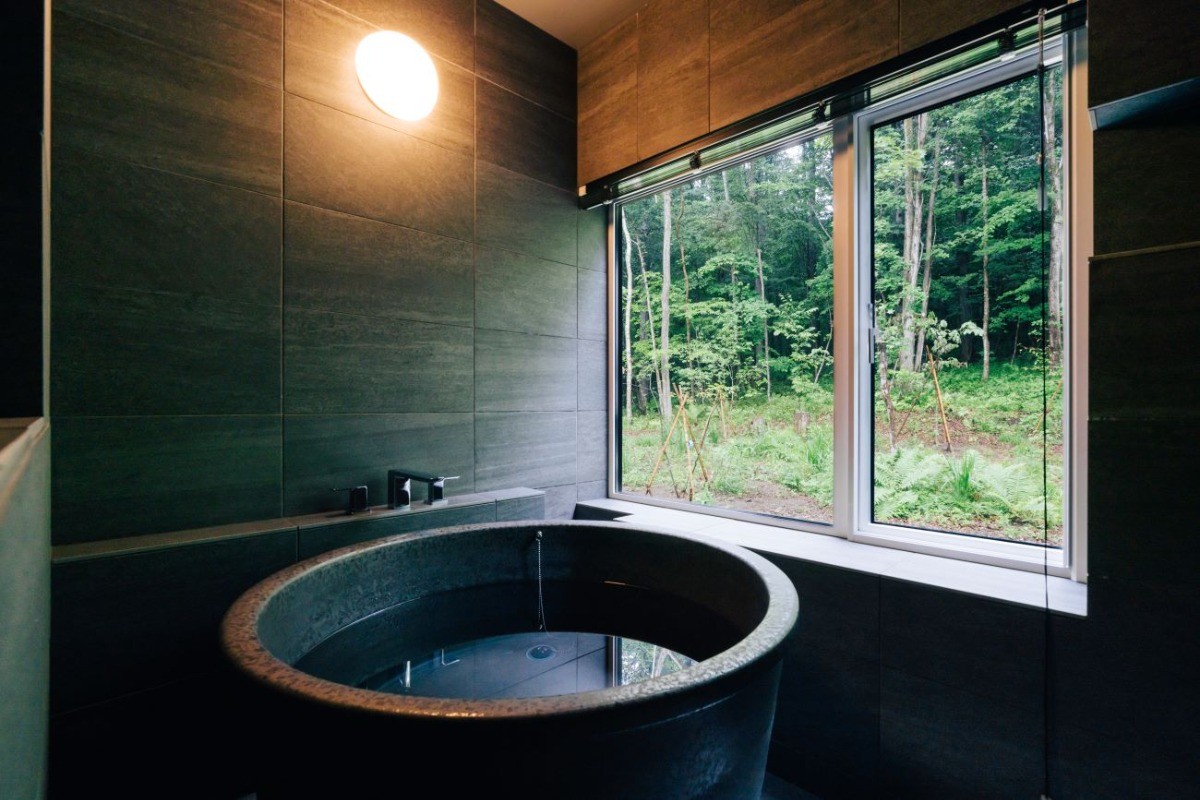
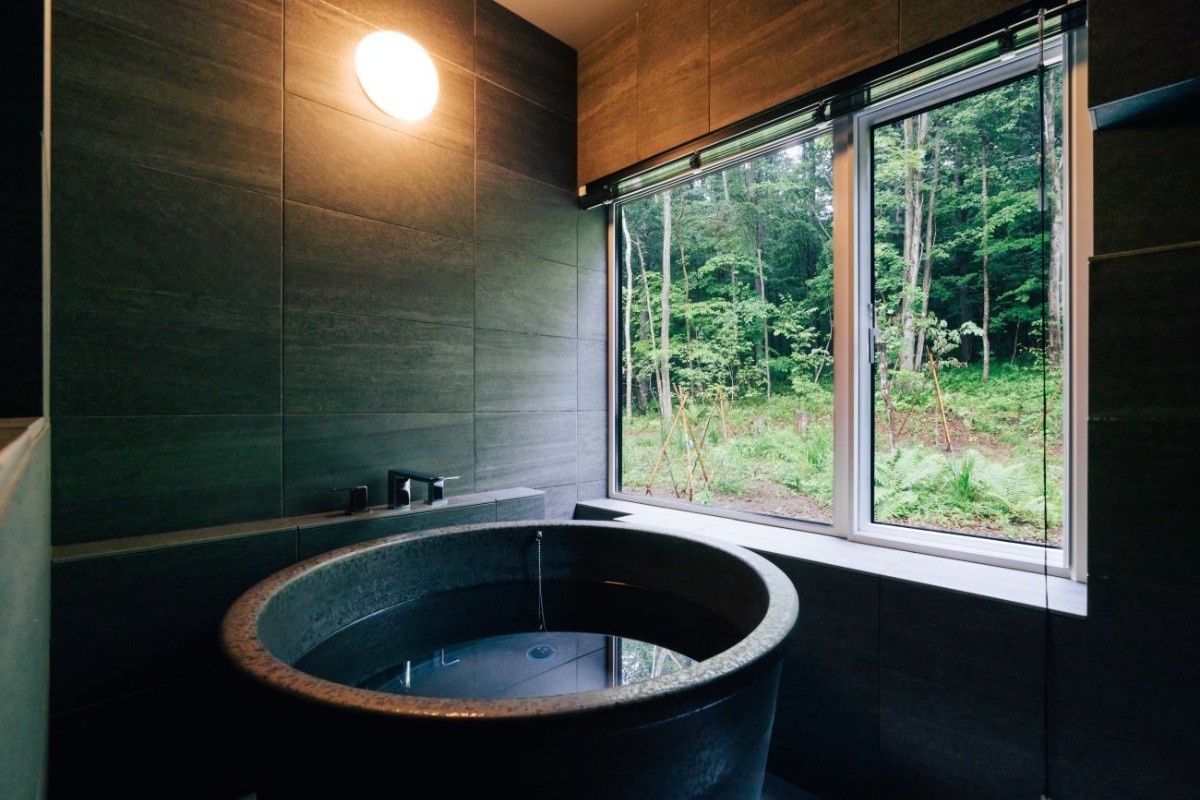
Blend kumazasa, chamomile and whatever herbs are in season into a bath mix of your own, then get into the Shigaraki ceramic tub looking out at the forest. The water is heated — it is not a natural hot spring.

Dinner — the Japanese creative course

PM18:00

Dinner — the Japanese creative course

The produce of Atsuma, one plate at a time, with sake or wine from Yoichi if you would like it.
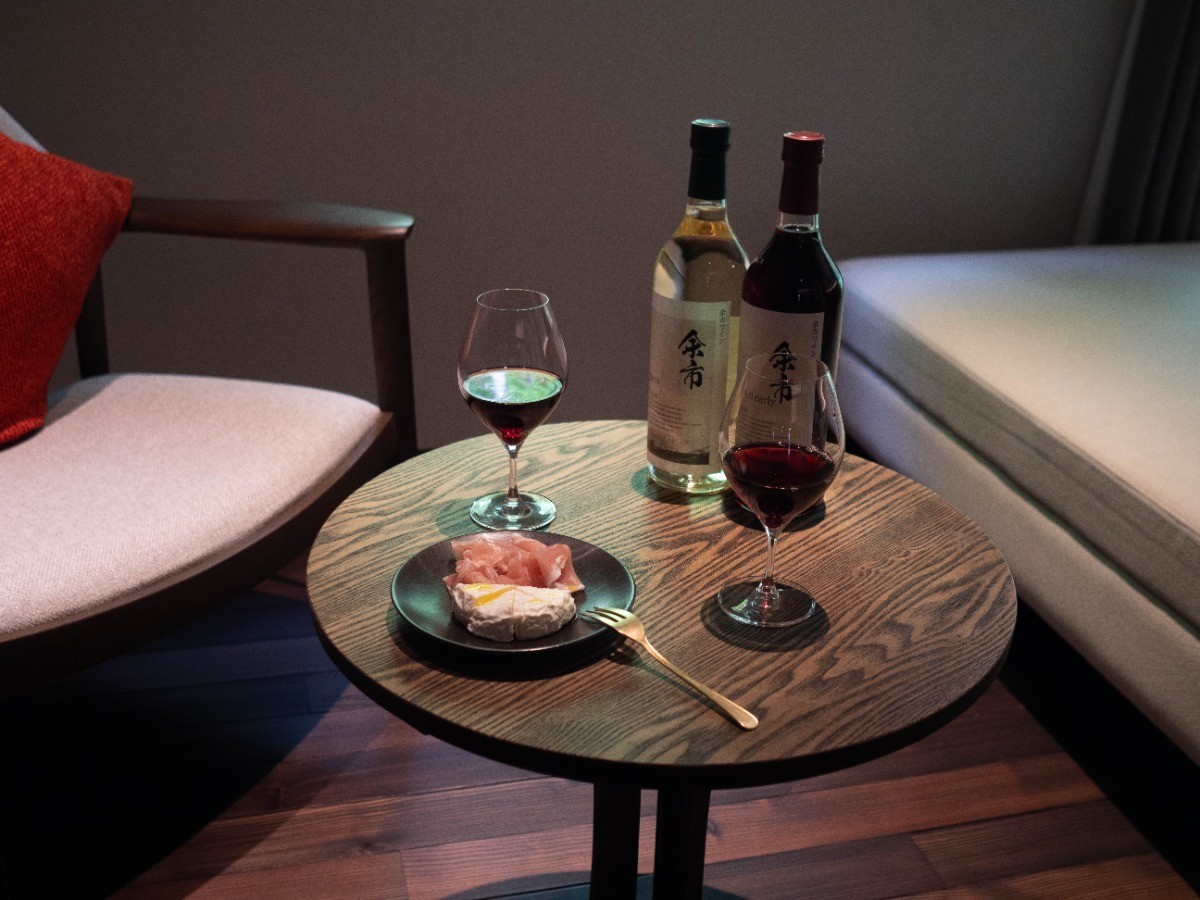
A drink in your room

PM20:00

A drink in your room

Yoichi wine and Hokkaido cheese, with whatever music you want on. The forest gets quieter as the night goes on.

Sleep

PM22:00

Sleep

No alarm, no television. Just the sound of the forest, and sleep that arrives on its own.
The Next Morning

The next morning

Breakfast is from 8:30 and check-out is at 10:00, which leaves enough of a morning to use the bath again before you go.

Waking, and a morning bath

AM7:00

Waking, and a morning bath

Morning light through the big window, birds instead of an alarm. A bath while you look at the trees.

Japanese breakfast

AM8:30

Japanese breakfast

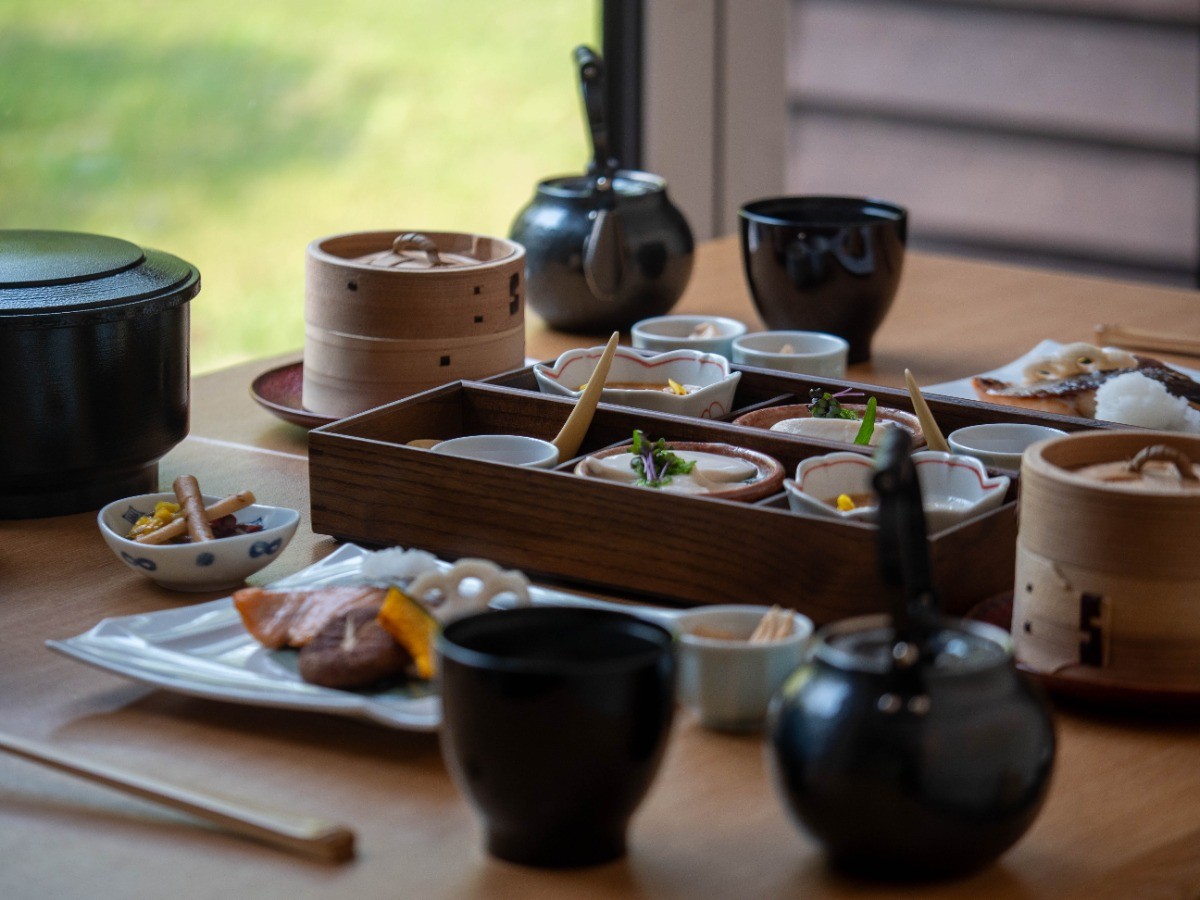
Nanatsuboshi rice from the clay pot, a rolled omelette of free-range eggs, and dashi chazuke you make at the table with bonito flakes you shave yourself.

Check-out

AM10:00

Check-out

By the time you have properly unwound, it is time to go. The quiet stays here, waiting.

Sleeping with the forest, waking with it

Turn the lights down and the only thing left is the forest. Shapes of trees outside the window, wind through the branches.

Later the eastern sky lightens, the morning comes through the large window, and the birds take the place of an alarm. You wake in step with the forest rather than against it.

That slow loosening of body and mind is, in the end, the thing this place is for.

The day after

Lake Shikotsu, Lake Utonai and Tomakomai are all within about an hour by car, and each is worth a different season. New Chitose Airport is about 30 minutes away, which is why a night here often works best at the end of a trip through Hokkaido rather than at the start of one — you finish quietly, then fly.

See access and travel times

A night in an old house runs at a different speed

When people start looking for a kominka stay — a night in an old Japanese farmhouse — the thing they most want to know is usually not the date the house was built or how the joints were cut. It is what the hours feel like. What you do in the evening. How you wake up.

This page is only about that. It follows one night at Mori no Auberge Mitsu, in the forest of Atsuma in Hokkaido, from arrival to breakfast, in the order it happens.

The house itself — moved here from Toyama in the early Meiji era, put together without relying on metal fasteners, the carved ranma transom still in place — is described on the 120-year-old farmhouse page. Here we only write about what a person does inside it.

The times are fixed: check-in at 15:00, dinner at 18:00, breakfast at 08:30, check-out at 10:00. Nineteen hours. What follows is how they go.

The short version is that a night in an old house runs at a different speed, because there is nothing to pack into it. There is no shop on site, no television in the room, and nothing outside but forest. With fewer things available, each one takes longer. Whether that reads as boredom or as luxury is the honest test of whether this place is for you.

15:00 — arriving: the smell of the entrance, and the sound of the door

15:00Check-in

You park at the edge of the forest and lift the bags out. The road in is fields and woodland the whole way, and guests often admit that they doubted the sign was coming.

The first thing an old house gives you is a smell. Wood, earth, and something faintly like smoke. It is not a smell modern buildings have, and nobody needs it explained — the nose gets there first, because the timber that has been in use for over a century is the wall and the pillar, not a finish laid over one.

The second thing is a change in sound. Slide the door shut and the outside drops away. In its place you start to hear the give of the floor and a bird somewhere further off. Your ears work out that this is a quiet place before the rest of you does.

Check-in is from 15:00. Once you have finished at the desk, there is nothing scheduled. Dinner is at 18:00, so three whole hours are open. Those three empty hours may be the most extravagant part of staying in a farmhouse.

Checking in at the front desk
15:00 — check-in, and the end of clock-watching

16:00–17:00 — the late afternoon forest, and filling the bath

16:00In the room

Settled in the room, the first thing almost everyone does is open the window. The forest begins immediately outside it, so opening the window changes the air in the room entirely. Branches moving, birds, and nothing mixed in underneath.

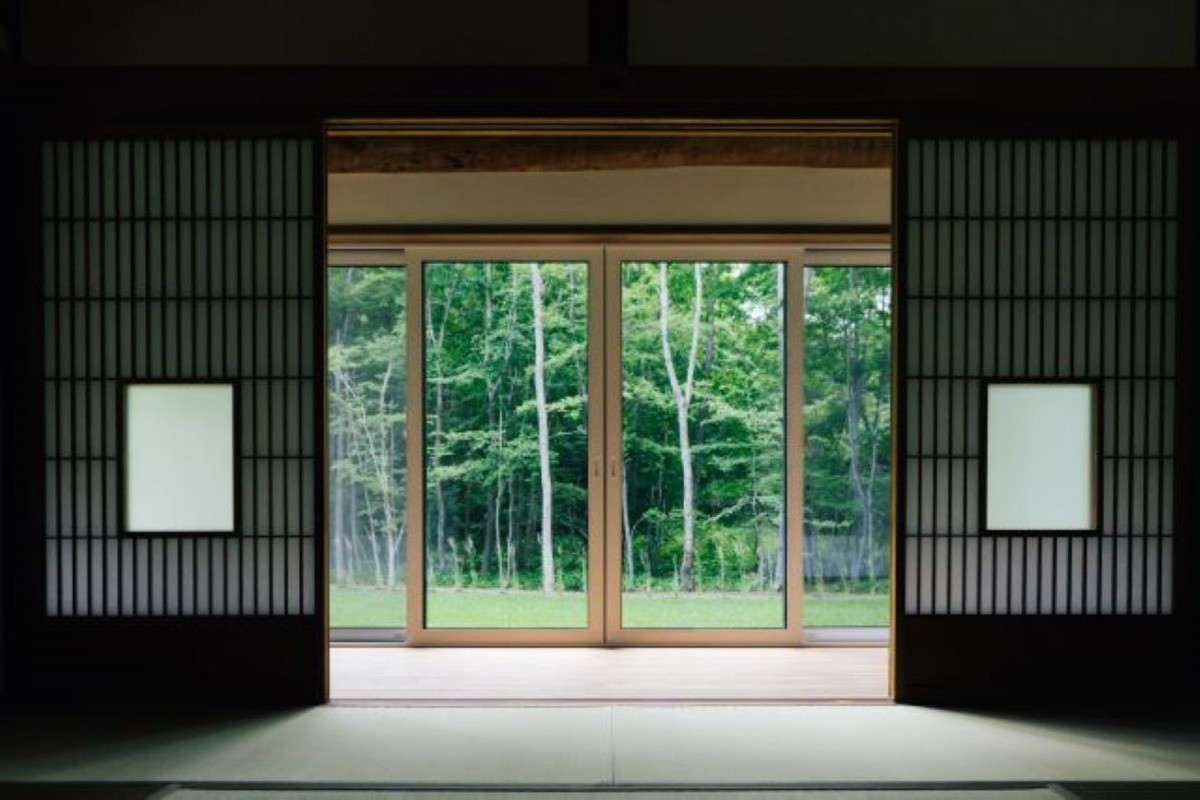
In the rooms with shoji screens you can watch the light change. Afternoon light is white; it turns yellow, and then blue. Paper takes light differently from glass, so the brightness outside becomes the colour of the room. For an hour in the late afternoon the room keeps changing colour. It is one of those things that only an old house makes obvious.

Around five, you fill the bath. Every room has a goemon-style tub in Shigaraki ware, and you blend your own herbs into the water — kumazasa bamboo leaf, chamomile, whatever the season has. Since you choose the mix yourself, the water never smells quite the same twice.

This is heated water, not a natural hot spring. Even so, sitting in a ceramic tub looking at trees does what it needs to do to a body that has been travelling. There is more about it on the forest herb bath page.

By the time you get out, it is properly dark outside. An hour until dinner. This is when the book people brought tends to get opened.

A table by the window, with green just outside
The window, and the green outside
Blending seasonal herbs for the bath
Choosing the herbs
A goemon-style tub in Shigaraki ware, in every room
The Shigaraki tub

18:00 — dinner at a table between century-old pillars

18:00Dinner

At six you come through for dinner. Three groups a night means at most three tables. You can talk at the volume you would use at home, and there is no music to talk over.

The food is a Japanese creative omakase course built on ingredients from Atsuma. It comes one dish at a time, which means it takes as long as it takes, and there is no reason to hurry it. Sake or wine from Yoichi goes alongside.

While you eat, the old pillars and beams stay at the edge of your vision, carrying 120 years of colour in the grain. Guests often say the same dish would sit differently in a newer room. There is more on the cooking on the dining page, and on where it comes from on the ingredients of Atsuma page.

Outside it is fully dark by now. With no town lights in the window, the darkness has a different quality from city darkness — less dark than simply empty. Look out mid-meal and then back at the plate, and the food under the lamp looks twice as vivid.

The Japanese creative course, built on ingredients from Atsuma
18:00 — the course, served one dish at a time

20:00–22:00 — an evening in a room with no television

20:00Evening

This is the part we get asked about most. There is no television in the rooms, and people want to know whether the evening drags.

Honestly: the first half hour does. If reaching for a remote is a reflex, your hands notice. Past that half hour, though, something else turns up on its own.

Most often it is a drink in the room. Wine from Yoichi and Hokkaido cheese, with whatever music you want on. A second, slower round after dinner.

After that, talking. With no screen and no notifications, a pause in a conversation stops being awkward. Silence can be left where it is. That is usually why people say things here that do not come up at home.

And some guests do nothing at all — sit by the window and look at a dark forest. An old house does not make an idle person look idle. There are too many places in it where you can lean against a post and sit.

By ten you are tired. No alarm, no television, and nothing to hear but wind in the branches. It is less like going to sleep than being drawn towards it.

There is more on the quiet itself on for those looking for a quiet inn, and on evenings away from screens on a digital detox at an inn with no television.
Yoichi wine and Hokkaido cheese in the room
20:00 — a drink in the room
A guest room with beds and a sofa, where the evening is spent
On the sofa, doing nothing
No alarm and no television, and sleep arrives on its own
22:00 — drawn towards sleep

07:00 — a bath while the forest gets light

07:00Waking

You tend to wake around seven, without setting anything. Light comes through the shoji and the room turns white, and the birds get louder at about the same time.

What is interesting about a morning in an old house is that the light arrives in stages. Paper scatters it, so even a bright morning outside becomes a gradual brightening inside. It is a different way of waking from pulling a curtain back on direct sun.

Once you are up, fill the bath again. The same tub gives you a completely different view than it did the night before: in the dark you were looking at the inside of the water, and in the morning the whole forest is there. Having the bath in the room is what makes that second look possible.

Breakfast is at 08:30, which leaves an hour and a half. It may be the quietest stretch of the whole stay, because nothing in the house has started moving yet.

A morning bath, looking at the forest in the early light
07:00 — the same bath, an entirely different view

08:30–10:00 — breakfast, and the last two hours

08:30Breakfast

Breakfast is Japanese: Nanatsuboshi rice from the clay pot, a rolled omelette of free-range eggs, and dashi chazuke made at the table with bonito flakes you shave yourself. It begins with steam coming off the rice, so you cannot start the moment you sit down. That is part of it.

While you eat, morning light comes across the table. Last night the same room was a scene lit by lamps; this morning it is daylight. You get to see one room twice.

Check-out is at 10:00, which leaves about an hour after breakfast. Packing does not take that long, so most guests go outside one more time. The forest in the morning has more sound in it than the forest in the evening does.

At ten you slide the door open and step out. Nineteen hours, start to finish. Asked whether that felt long, almost everyone says it felt short — and yet a night with nothing scheduled in it leaves more to remember afterwards. That contradiction is the strangest thing a farmhouse stay leaves you with.

What to do the day after is on the around page. New Chitose Airport is about 30 minutes away by car.

Japanese breakfast with rice from the clay pot
08:30 — Japanese breakfast
Morning light in the farmhouse lounge
Morning light in the lounge
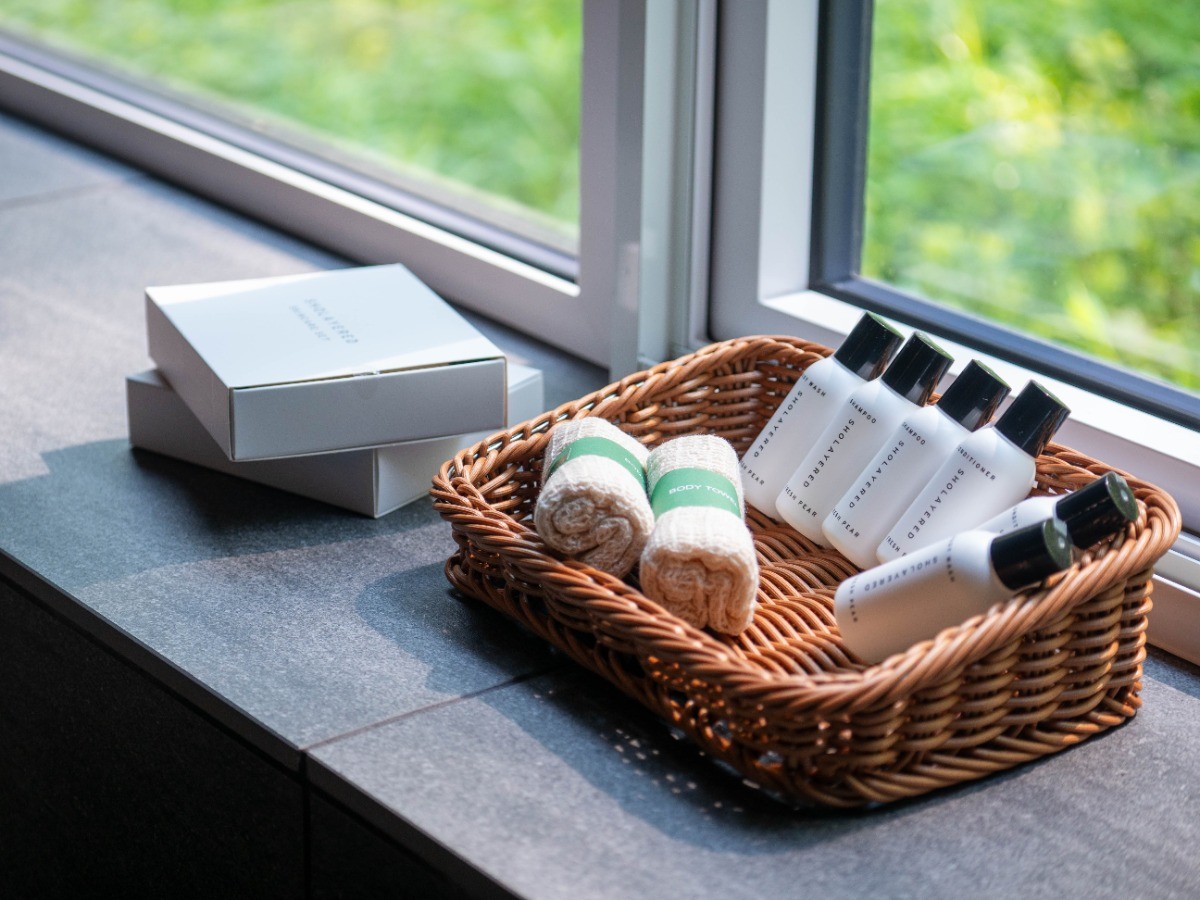
Amenities in a basket by the window, greenery outside
10:00 — the window, before you go

Questions people ask before a farmhouse stay

Q. Will the evening be boring?

There is no television in the rooms, and most guests do feel at a loose end for the first half hour. After that it settles into a drink in the room, conversation, reading, or sitting by the window doing nothing. It is not a place for an evening with a schedule, which is rather the point of coming.

Q. It is an old building — is it comfortable?

Everything you touch day to day has been brought up to date. The plumbing is new and every room has its own goemon-style bath indoors. What we kept is the character of the old house: the feel of wood and earth, and the quiet. In deep winter the building is not sealed the way a modern house is, so we heat the rooms before you arrive.

Q. How much time is there between arrival and departure?

Check-in is at 15:00 and check-out at 10:00, so nineteen hours. Dinner is at 18:00 and breakfast at 08:30; everything either side of those is yours. There is no shop on site and nowhere to eat out nearby, so it is worth buying anything you particularly want on the way.

Reservations

Three groups a night. A day that belongs to the forest.

Book on CHILLNN

Rates, availability and plan details are shown on our official booking site (CHILLNN), which has an English version.