Journal | 2026.09.16
This journal is about the autumn of Noboribetsu Jigokudani, a valley in southern Hokkaido. It is a crater about 450 metres across, whose rock walls the autumn leaves colour.
Hokkaido's official tourism site calls it the blast crater of Mount Hiyori. White steam and heat rise from the ground, and in autumn the turning leaves colour the walls. There is no charge to look, and the site is a minute's walk from the car park.
Mori no Auberge Mitsu sits in a forest about 30 minutes by car from New Chitose Airport. You can visit Noboribetsu on a day trip, then spend the night back at the auberge.
Noboribetsu Jigokudani: a crater 450 metres across
Hokkaido's official tourism site describes Noboribetsu Jigokudani as the blast crater of Mount Hiyori. White steam and heat rise from it, and you can see this all year round.
Its size and the volume of hot water are set out in the table below. These are the figures given in Noboribetsu's tourism information.
| Item | Figure |
|---|---|
| Diameter | About 450 metres |
| Area | About 11 hectares |
| Hot water | Up to 10,000 tonnes a day |
| Admission | Free |
Autumn foliage on the crater walls, and when to go
According to Hokkaido's official tourism site, in autumn the turning leaves colour the walls of Jigokudani. You see coloured trees close beside the steaming, pale rock.
When the leaves are at their best changes from year to year. The timing shifts with the temperature that year, so please check the latest information from Noboribetsu City or the tourism association before you set out.
Mitsu's Around page also introduces seasonal places to stop. It is worth a look when you plan a day out to Noboribetsu.
Parking at Jigokudani, and the free Tessen-ike geyser
Jigokudani is about 10 minutes by car from the Noboribetsu-Higashi interchange on the Do-o Expressway.
Parking at Jigokudani costs 500 yen per car for one entry a day. Hokkaido's tourism site describes it as paid parking for 165 cars. From the car park, the site is about a minute's walk.
The same ticket also covers the car park at Oyunuma, a little way off, except in winter. A wheelchair ramp, with a gradient of no more than 8 per cent, runs from the park service centre to the viewing deck.
Near the middle of the valley is a small geyser called Tessen-ike. It spouts less than it once did, but from the boardwalk you can see a stream of hot water, and it costs nothing to look.
From Noboribetsu home to the forest at Mitsu
Ten different kinds of hot spring water rise at Noboribetsu. After a day trip walking the steaming valley, you can return to the forest at Mitsu.
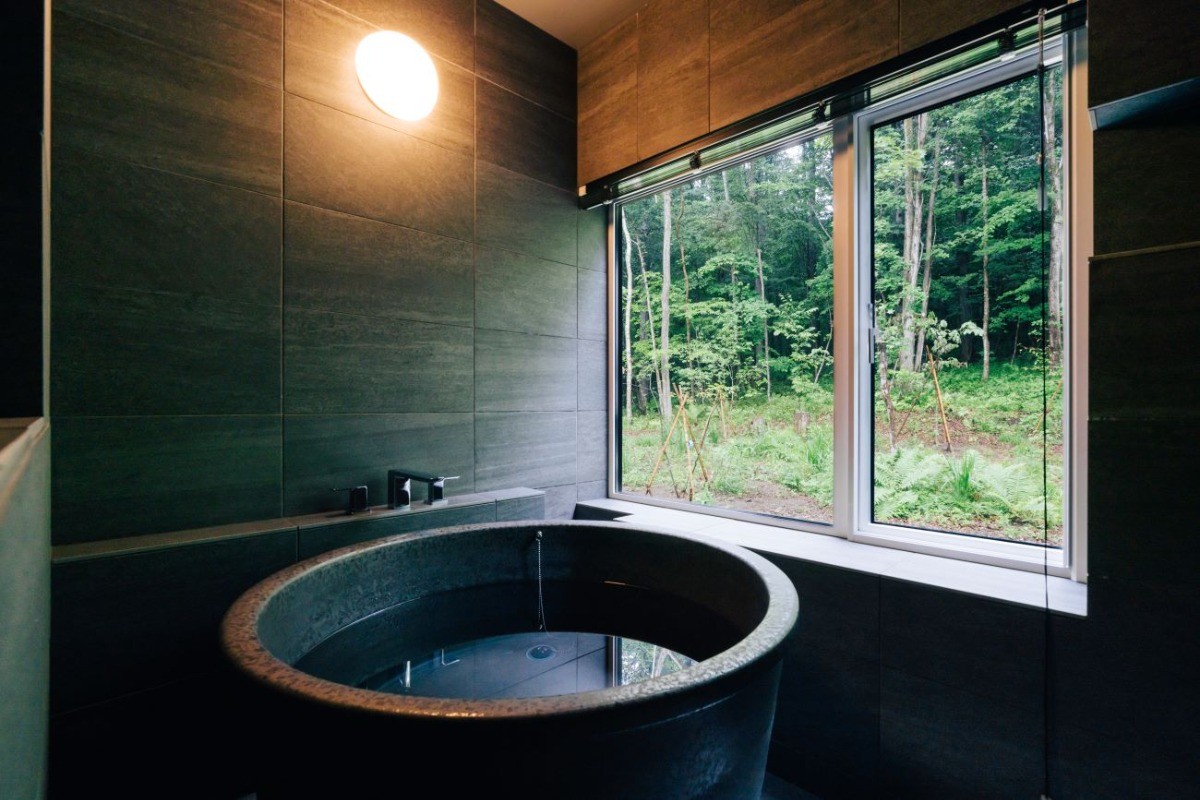
The bath at Mitsu is not a natural hot spring. Every room has its own goemon-style soaking tub in Shigaraki ceramic ware, heated water, and there is no shared bathhouse. You can see how it is made on the goemon-style bath page.
There is no television in the rooms, and Wi-Fi is in every one. Under the beams of a 120-year-old farmhouse, you can let the evening slow down. The Stay page is worth a look too.
Getting to Mitsu, and a guide to the rates
Mitsu is about 30 minutes by car from New Chitose Airport, and about 15 minutes from the Atsuma interchange on the Hidaka Expressway. Tomakomai is about 20 minutes away, and Lake Shikotsu about an hour.
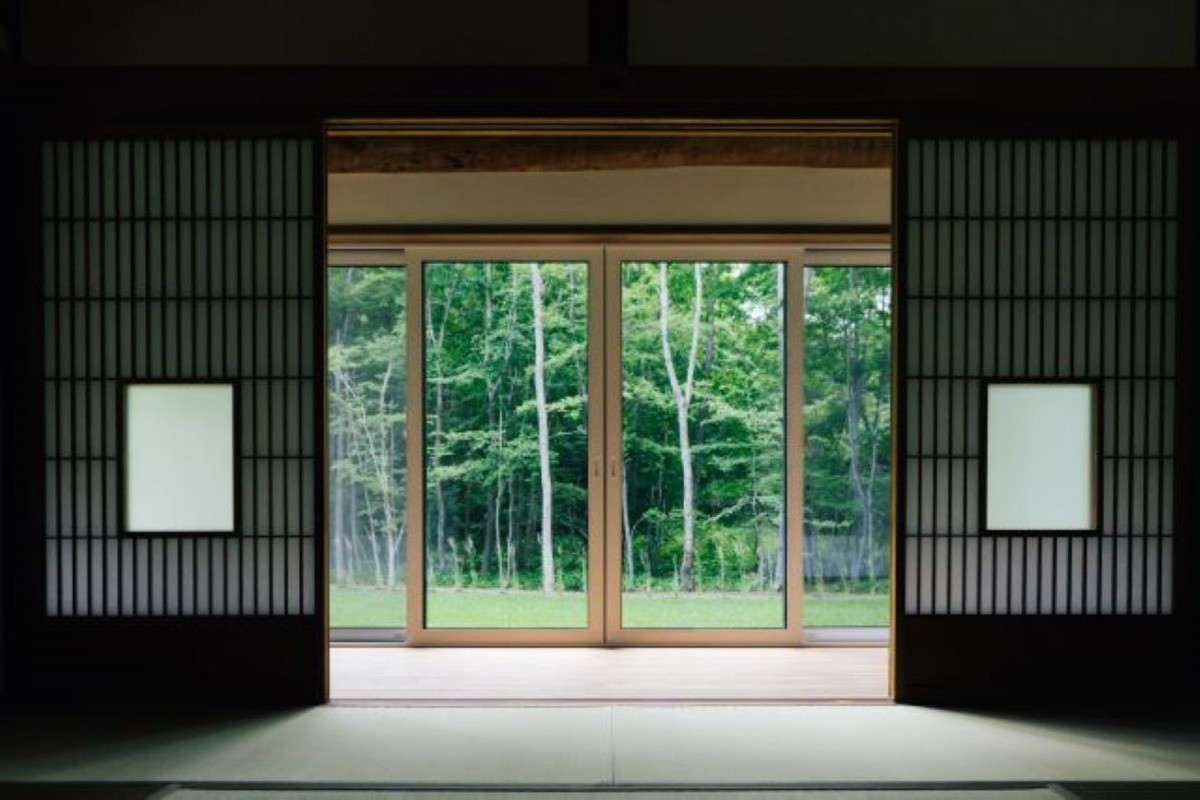
Mitsu is a small auberge that takes three groups a night, in three rooms named Ki, Mi and Tsuki. Dinner is an omakase kaiseki course that follows the Hokkaido season, and breakfast is served too, except on room-only plans.
The guide price is from about 28,000 yen per person with dinner and breakfast, based on two people sharing a room. Rates are subject to change; please check the booking site before you travel. There is free parking for 10 cars, with no reservation needed. The Access page is also there to help.
Frequently asked questions
Is there a charge to visit Noboribetsu Jigokudani?
No, it is free to visit. The small geyser Tessen-ike, near the middle of the valley, is free to see as well. Only the car park costs money, at 500 yen per car for one entry a day.
Are the autumn colours at Noboribetsu Jigokudani best in October?
Hokkaido's official tourism site says the turning leaves colour the walls in autumn. Which month is best changes from year to year, so even if you are planning for October, please check the latest information from Noboribetsu City or the tourism association before you go.
How far is the car park from the valley at Jigokudani?
From the car park it is about a minute's walk to the valley. Hokkaido's tourism site describes paid parking for 165 cars, and it costs 500 yen per car for one entry a day. The same ticket also covers the Oyunuma car park, except in winter.
Is the bath at Mitsu a hot spring?
No, it is not a natural hot spring. Every room has its own goemon-style soaking tub in Shigaraki ceramic ware, heated water, and there is no shared bathhouse.
Related: Around / The goemon-style bath / Access / Stay | Back to the journal